CONTACT US
It’s dark. It’s cold. It’s winter. For people living in many parts of the U.S., this trifecta may affect a person’s mood in different ways, including for some the onset of seasonal affective disorder or SAD. And for many, the post-holiday period can bring mixed emotions: Happy memories of a time filled with joy and that good kind of stress that comes with family gatherings. Or sadness about guests going home and life returning to its normal routine. For people living with pancreatic cancer, the cancer journey itself adds another layer of complex emotion to navigate.
If any of this strikes a chord, you are not alone. Let’s talk about cold, dark days, the complications they may bring and some strategies to help get through.
The Post-Holiday Blues
For many, once New Year’s Day passes and the confetti falls, the feeling of an empty home can be depressing, even lonely. Remember, these feelings are completely normal, but if you find they are sticking around for long periods of time, it may be time to talk with your doctor or a therapist for support navigating the year ahead.
If the post-holiday blues are not part of a larger pattern of anxiety or depression, they might be a good cue to take a step back and use the quiet as an opportunity to reflect on the past few weeks. Write a journal entry or simply meditate on the good memories, laughs and other emotional ups and downs. Consider looking at this post-holiday time from a different angle and reframe what it means to you. This can help end that negative thought cycle and focus on what you need moving forward. Maybe it’s a well-deserved time of rest and self-care. Or an opportunity to embrace a quieter season and nurture connections with people you value the most.
Facing the Dark and Cold Days: SAD and Cancer
Our body relies on sunshine for a lot of things. It can improve our mood, help regulate our sleep-wake cycles, and even helps our body create vitamin D, an essential nutrient for the body. For people who live in areas that experience shorter and darker winter days, the lack of sunshine can lead to SAD. SAD has its own unique attributes in addition to the common symptoms of depression.
Depression symptoms include:
- Feelings of hopelessness or pessimism
- Feelings of guilt, worthlessness or helplessness
- Difficulty concentrating, remembering or making decisions
- Loss of interest or pleasure in hobbies and activities
SAD symptoms include:
- Oversleeping
- Overeating and increased cravings
- Feelings of social withdrawal or “hibernation”
Add navigating cancer on top of the dark and cold days, and you have a recipe for symptoms that can feel difficult to manage. Mental health concerns should always be addressed with the same care and attention you would give any other physical symptom. Depression can make handling and recovering from cancer treatment more difficult, making open and honest conversations about mental health all the more important.
Remember, you can always speak with the member of your healthcare team you feel most comfortable with. They can pass along the information and set up a game plan to help you feel your best.
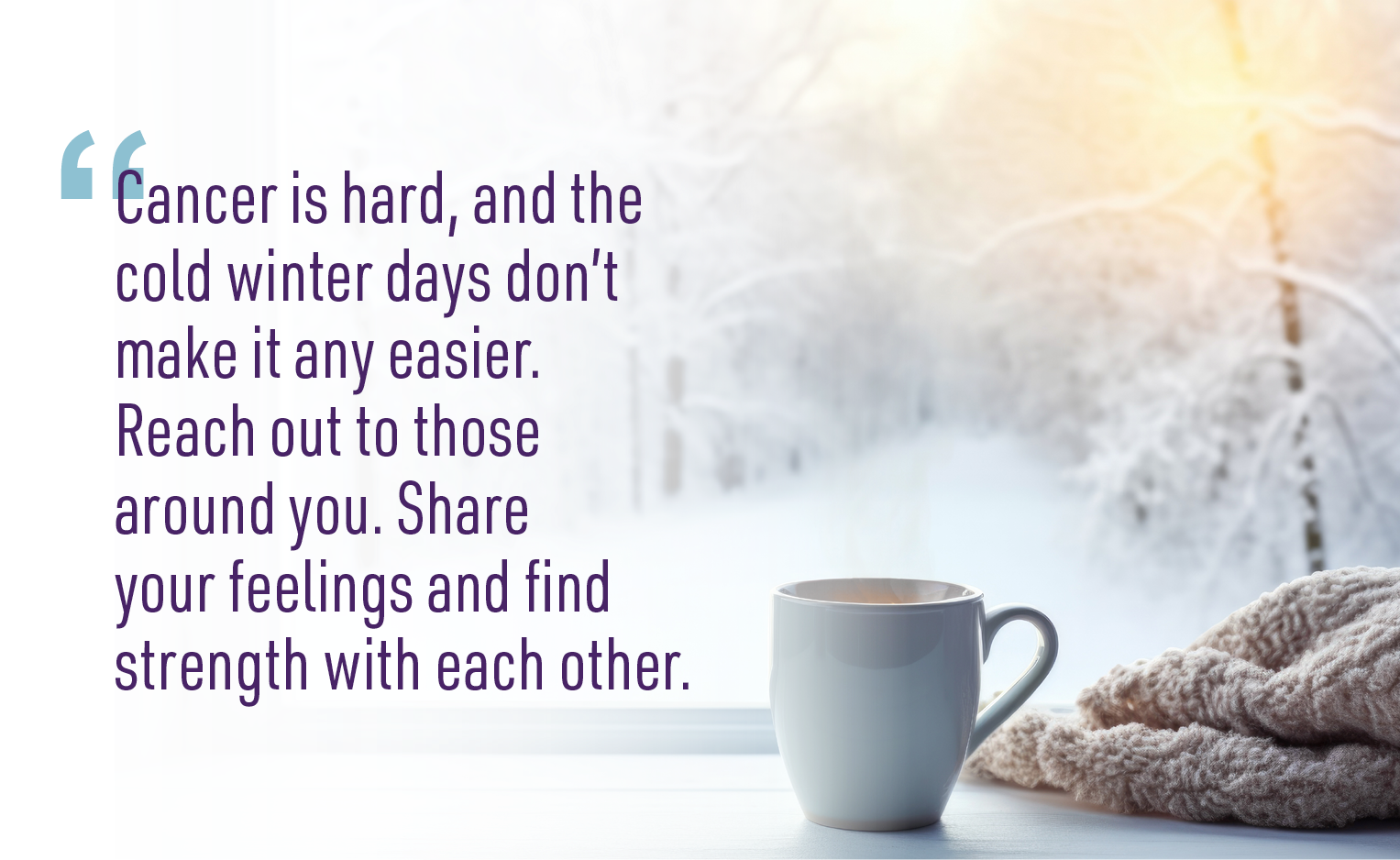
Along with managing their own emotions, many people living with cancer feel pressure to keep loved ones happy, which can make discussing depression and seasonal mood changes difficult, or taboo, to talk about. But the truth is, cancer is hard, and the cold winter days don’t make it any easier. You are not alone, and communicating openly about the emotional toll of cancer does not make anyone any less of a survivor. Reach out to those around you. Share your feelings and find strength with each other. The community of support around you is ready to help and listen.
Here are some additional strategies to cope with seasonal mood changes:
- Consider joining online and over-the-phone communities like the PanCAN Smart Patients Community or PanCAN’s Survivor and Caregiver Network, where you can build connections with people going through similar experiences.
- For SAD, you can also try to get more natural light by sitting outside for a short time; bundled up of course! Doctors may also recommend light therapy, which uses a type of lightbox to mimic natural light.
- Gentle exercise may help to boost mood and make you feel more energized.
- Professional therapy may be the right option for some patients. Some providers work specifically with patients facing cancer. PanCAN Patient Services can help point you in the right direction.