CONTACT US
Editor’s note: Medical Research Week gives us a chance to recognize the groundbreaking work of scientists whose discoveries have led to new treatments, cures and diagnostic tools for devastating diseases like cancer. To mark the week, we are sharing the story and experience of Luisa Escobar-Hoyos, MSc, PhD, a pancreatic cancer researcher whose work became even more personal after her mother was diagnosed with the disease. Read about her journey to becoming a researcher, how her personal connection shapes her work and the importance of federal funding for medical research.
Pancreatic cancer researcher and professor Luisa Escobar-Hoyos, MSc, PhD, saw her work hit too close to home when her mother Luz, also a cancer researcher and professor, was diagnosed with one of the world’s toughest cancers.
So, when Dr. Escobar-Hoyos had the opportunity to speak at a Congressional briefing on the importance of federally funded cancer research in 2024, she shared how her lab’s research depended on funding from our government – and how her work had become more personal than ever before.
“I felt that it was important for them to hear my personal story as a scientist, and as a family member of a patient,” said Dr. Escobar-Hoyos. “It really illustrates that the funding we need isn’t just for the scientific community, but for families as well.”
A Spark of Curiosity Inspires a New Focus
Dr. Escobar-Hoyos remembers the first time she saw an image of a pancreatic cancer tumor. She was mid-way through her PhD as a Fulbright Scholar, focusing on cervical cancer and training with pathologist Dr. Kenneth Shroyer. During one of her training sessions, an image of a pancreatic cancer tumor resonated with her.
“It was so different. How can a tumor with only a few cells be so lethal?” she asked herself.
Upon graduation, a mentor asked what her plans were. Dr. Escobar-Hoyos knew that she wanted to focus on a disease that really needed help. She went on to complete her postdoctoral training with Dr. Steven Leach at Memorial Sloan Kettering Cancer Center (MSKCC).
Raising Funds for Patients Leads to Receiving Research Funding from PanCAN
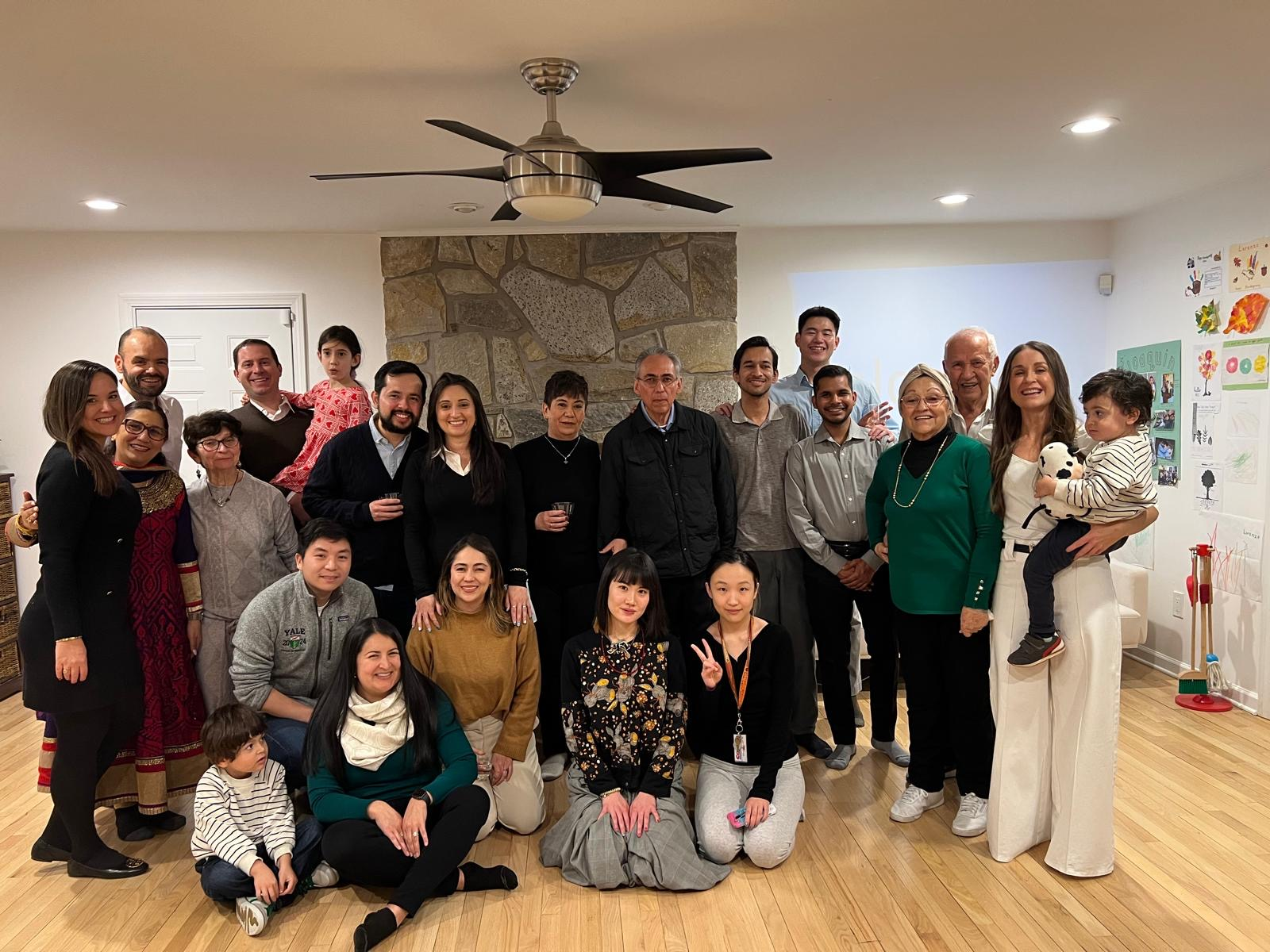
Dr. Escobar-Hoyos with members of her lab and family.
Dr. Escobar-Hoyos connected with PanCAN when Dr. Leach forwarded her an email about PanCAN PurpleStride during her post-doc. Already familiar with PanCAN’s work, she asked if she could lead the team at MSKCC. Around that time, she read an article about PanCAN’s Research Grant Program. She applied and was awarded the 2017 Pancreatic Cancer Action Network – AACR Pathway to Leadership Grant.
It was the first grant she received, and it helped her secure two additional major grants from the National Cancer Institute (NCI) and the National Institutes of Health (NIH).
Dr. Escobar-Hoyos feels that her first grant from PanCAN propelled her career.
She now runs her own lab, the Escobar-Hoyos Lab, at Yale School of Medicine, where roughly 90% of their focus is dedicated to pancreatic cancer research. The lab focuses on uncovering novel biomarkers, drug targets, and therapies to transform the clinical-management framework of pancreatic cancer with diverse treatment options. By exploring the “deep” transcriptome and proteome of pancreatic cancer cells, and through collaborations across fields and with medical, patient advocacy, and start-up communities, the lab developed antibody-based technologies to subtype pancreatic tumors, and novel RNA-based immuno- and targeted-therapies, currently in preclinical and clinical studies. The hope is to make better diagnoses and match patients with the right therapies.
From the Lab to a Congressional Briefing
In 2024, on World Cancer Research Day, Dr. Escobar-Hoyos spent her time in Washington, D.C., representing PanCAN and the pancreatic cancer research community at an event hosted by the organization One Voice Against Cancer educating Congressional staff on the importance of federal funding for cancer research.
At the time, she had no idea that in just a few months, federal research funding would be under attack from the current administration.
Research for pancreatic cancer is on the precipice for new breakthroughs and treatments – it needs more federal support than ever before and our elected officials in Congress must listen and act.
Dr. Escobar-Hoyos wants patients to live longer, high-quality lives. “I think we’re going to get there. In the next two decades, there’s going to be a big change in the five-year survival of the disease, but we need the funds.”
Though the administration is trying to push through devasting cuts, she shares that with higher costs, the need for increased funding is now. The funding isn’t doubling, but the expenses are, and the only way to bridge that gap is through increased funding. And even then, you’re not expanding research, you’re just playing catch-up.
“My grants do not get doubled, but my expenses are doubling, so I need more funds in order to do the same research.” Sharing her story as a scientist and someone personally affected by the disease, Dr. Escobar-Hoyos made an impact on Congressional staffers.
“There was more meaning in having them [the staffers] come to me afterwards and say, ‘Oh, your story was nice because it gave meaning to what I do and helped me further understand how my job [in Congress] has an impact on research.’”
Dr. Escobar-Hoyos says connecting with staffers also helped her understand their part in funding increases. “You never get to hear from both sides. We just apply, hopefully receive funds to do the research and that’s it. Both ways, we never think about the people who are behind the funding.”
The Need for Hope … and Funding
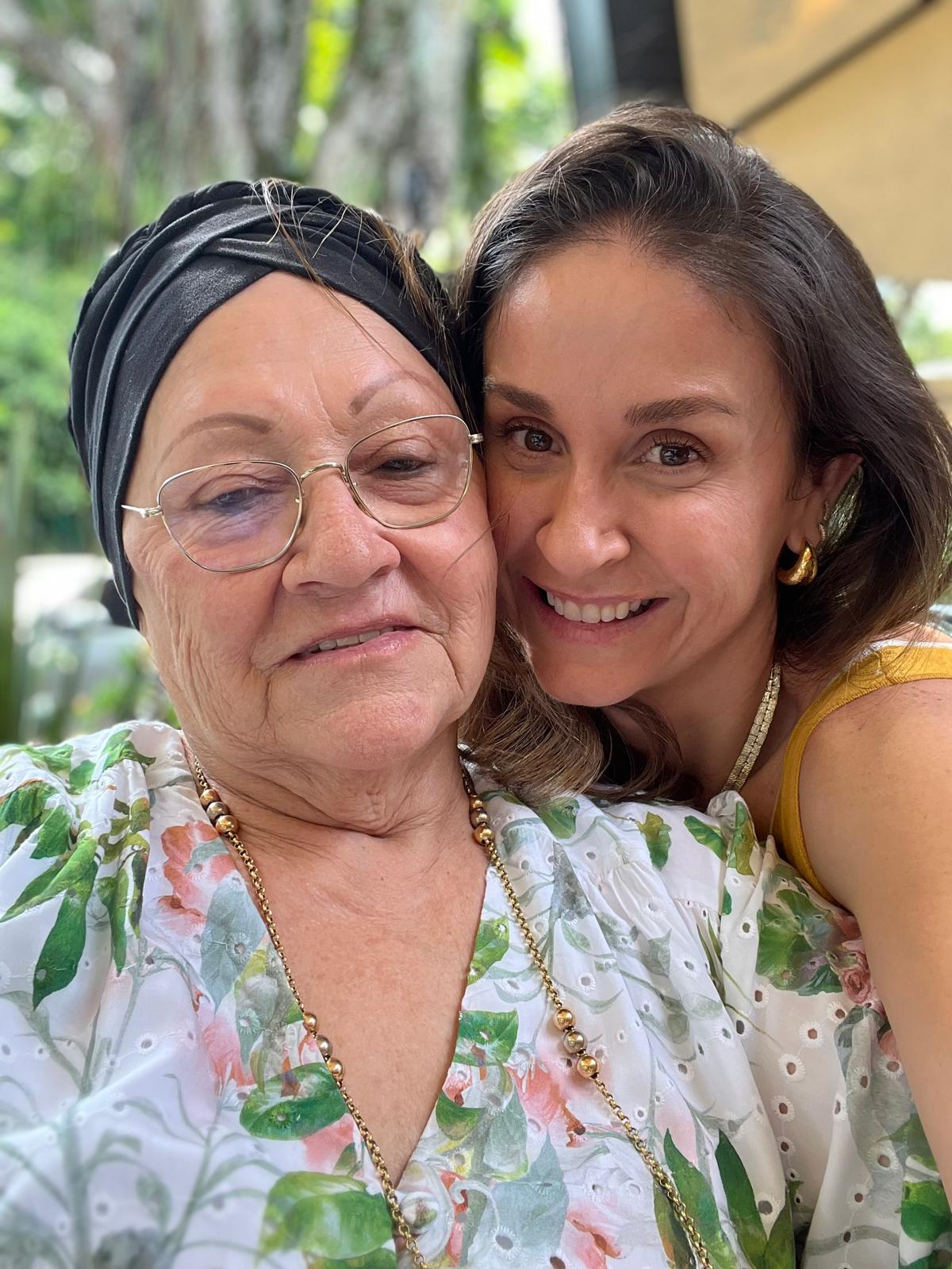
Dr. Escobar-Hoyos with her mom, Luz Stella Hoyos Giraldo, who was also a cancer researcher.
In December 2024, Dr. Escobar-Hoyos spent the holidays with her mom.
At the time, Dr. Escobar-Hoyos shared, “She’s my role model. She’s also a cancer scientist. Like me, she trained in the U.S. She went back to Colombia to raise a family and start a lab. It’s because of her I’m a scientist, and just when I thought she couldn’t teach me anything more, she gets diagnosed. I now have a deep understanding of this disease from a personal level – one of the most loved human beings in my life. So, I get this. I get it more than ever.”
Sadly, her mother passed away a few months later.
Dr. Escobar-Hoyos also expressed her wish that one day, when someone is diagnosed with pancreatic cancer, no one tells them there’s no hope. “I want to take away the stigma that pancreatic cancer is like a death sentence. I really want to remove that so patients and families can feel like they have a bit more hope.”
Her message to Congress now? To adopt the philosophy of her lab.
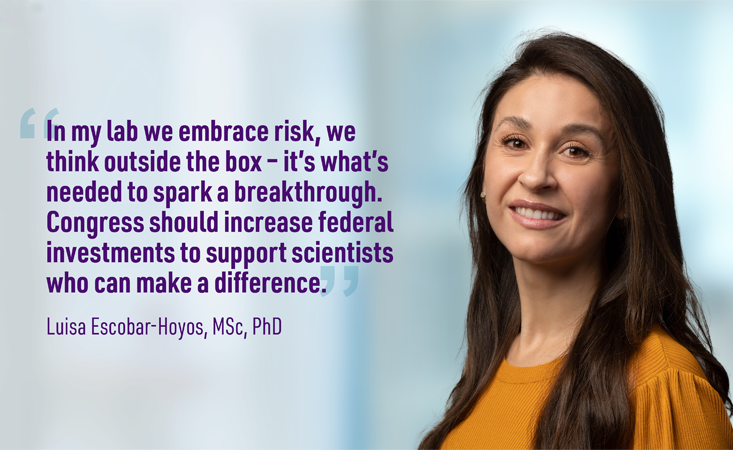
“In my lab we embrace risk, we think outside the box – it’s what’s needed to spark a breakthrough. Congress should increase federal investments to support scientists who can make a difference.”