CONTACT US
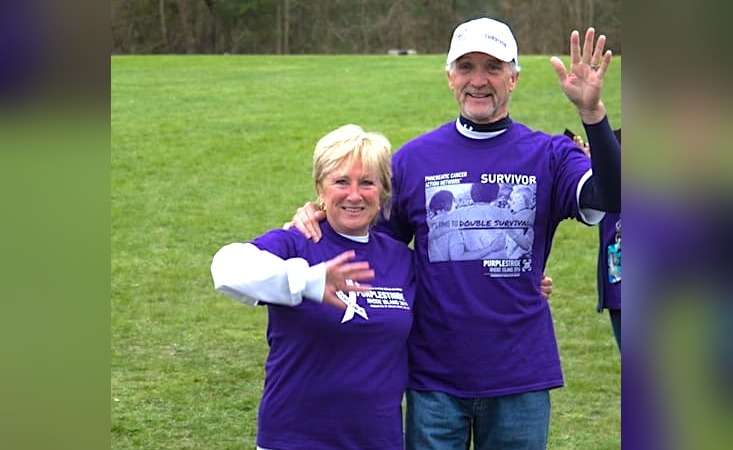
John and his wife, Cindy.
Editor’s Note: Survivor, volunteer and top PurpleStride fundraiser John Walmsley spoke with PanCAN’s Paula Mukherjee about his commitment to providing support to other survivors and passion for fundraising.
Paula: What is your connection to PanCAN’s mission?
John: It all started in the winter of 2015. I wasn’t feeling like myself. I had no energy. I knew something was wrong, but I didn’t know what it was.
I went to my doctor and he did blood work. The results were inconclusive. He scheduled me for an ultrasound. Before I could get it, I turned yellow from jaundice.
My wife and daughter told me I had to go to the hospital. I got a CAT scan, and it showed a small mass at the head of the pancreas. I was admitted to the hospital and got an endoscopy.
It was pancreatic cancer.
After my diagnosis, I did a lot of research on pancreatic cancer and the Whipple procedure. I learned that you want to get a high-volume pancreatic cancer surgeon at a high-volume hospital.
My doctor contacted a surgeon at Massachusetts General Hospital in Boston, Dr. Carlos Fernandez-del Castillo. I’m lucky to live in driving distance of Boston. I’ve been so lucky in many ways.
Paula: What was your treatment plan?
John: I had the Whipple procedure in February 2015, then 16 weeks of chemo, and then radiation with more chemo. I completed treatment at the end of August that year.
Paula: How was the experience of sharing your diagnosis with your family?
John: It’s tough to hear that someone you love has been diagnosed with this disease. Back then, the five-year survival rate was 5%.
Today, the five-year survival rate is 13%, a marked improvement.
My wife, Cindy, was great. She’s my everything. When I was diagnosed, she was caretaking for her mom at our home. She then cared for both her mother and me while still working.
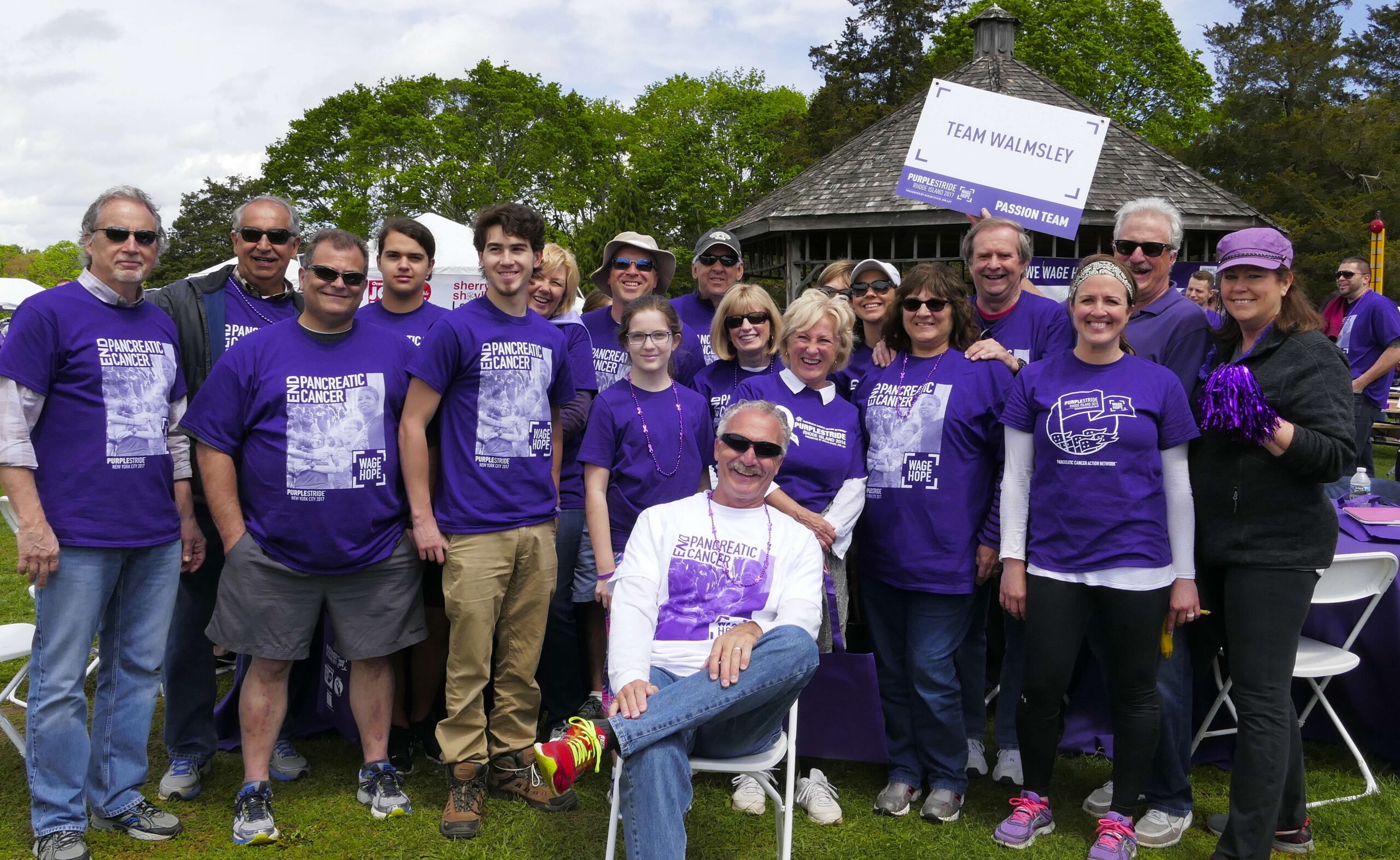
John with members of his PurpleStride team.
Paula: How did you become involved as a PanCAN volunteer and PanCAN PurpleStride Team Captain?
John: I read everything on the PanCAN website!
The Rhode Island Affiliate held PurpleLight the November after my diagnosis, during Pancreatic Cancer Awareness Month. I was asked to say a few words as a newly diagnosed patient.
I participated in my first PurpleStride the following year. That got me involved and wanting to do more.
I decided to form a PurpleStride team and hold a team fundraiser in March. In Rhode Island, everybody is cooped up at home in the winter. Why not have a small party? We got people together for music and fun and raised money for PurpleStride.
I met up with a friend from my hometown, Kevin Sullivan. He had been diagnosed with pancreatic cancer and his family wanted to get involved with PurpleStride. Sadly, Kevin passed away shortly after a golf tournament fundraiser we held together.
Kevin had a big family and a lot of support. Our families and friends joined forces and created Team Walmsley-Sullivan. It’s just exploded from there and we hold team fundraisers every year.
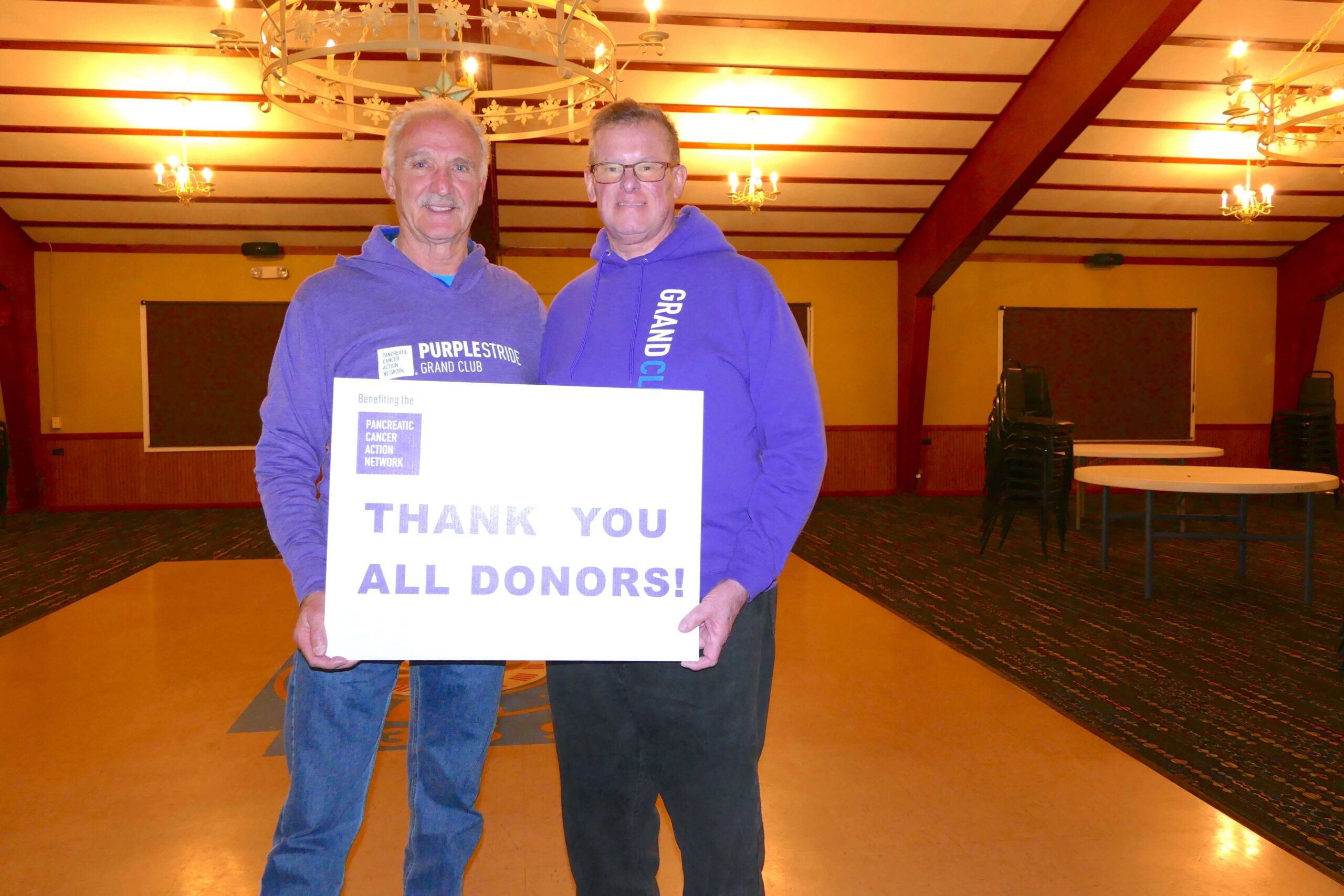
John and late co-Team Captain Kevin Sullivan at their first fundraiser.
Paula: Team Walmsley-Sullivan was the number one fundraising team for PurpleStride Rhode Island 2026 and raised over $52,000. Congratulations! What are your top fundraising tips?
John: Fundraising takes effort, but it doesn’t have to be overwhelming.
It shouldn’t be one or two teams that raise all the money for PurpleStride. If you have 60 teams, and one person on each team throws a little party to fundraise, that’s a lot of money. It can be a party, a golf tournament, a cornhole tournament, whatever.
I know there are so many worthy causes and everybody can’t give to everything, but you have to ask.
I’m not asking for donations for my own benefit; I’m a very lucky guy. I ask because you don’t know who will be diagnosed in the future, and they’re the ones who will benefit from the funds we raise.
Paula: What kind of fundraising events have you done?
John: Our main event is a music fundraiser. It’s gotten bigger over the years and we’ve outgrown a few venues. I have a lot of musician friends who volunteer their time and talent.
Paula: You wrote a song, “Wage Hope,” to inspire others who have been diagnosed with pancreatic cancer. What is the story behind the song?
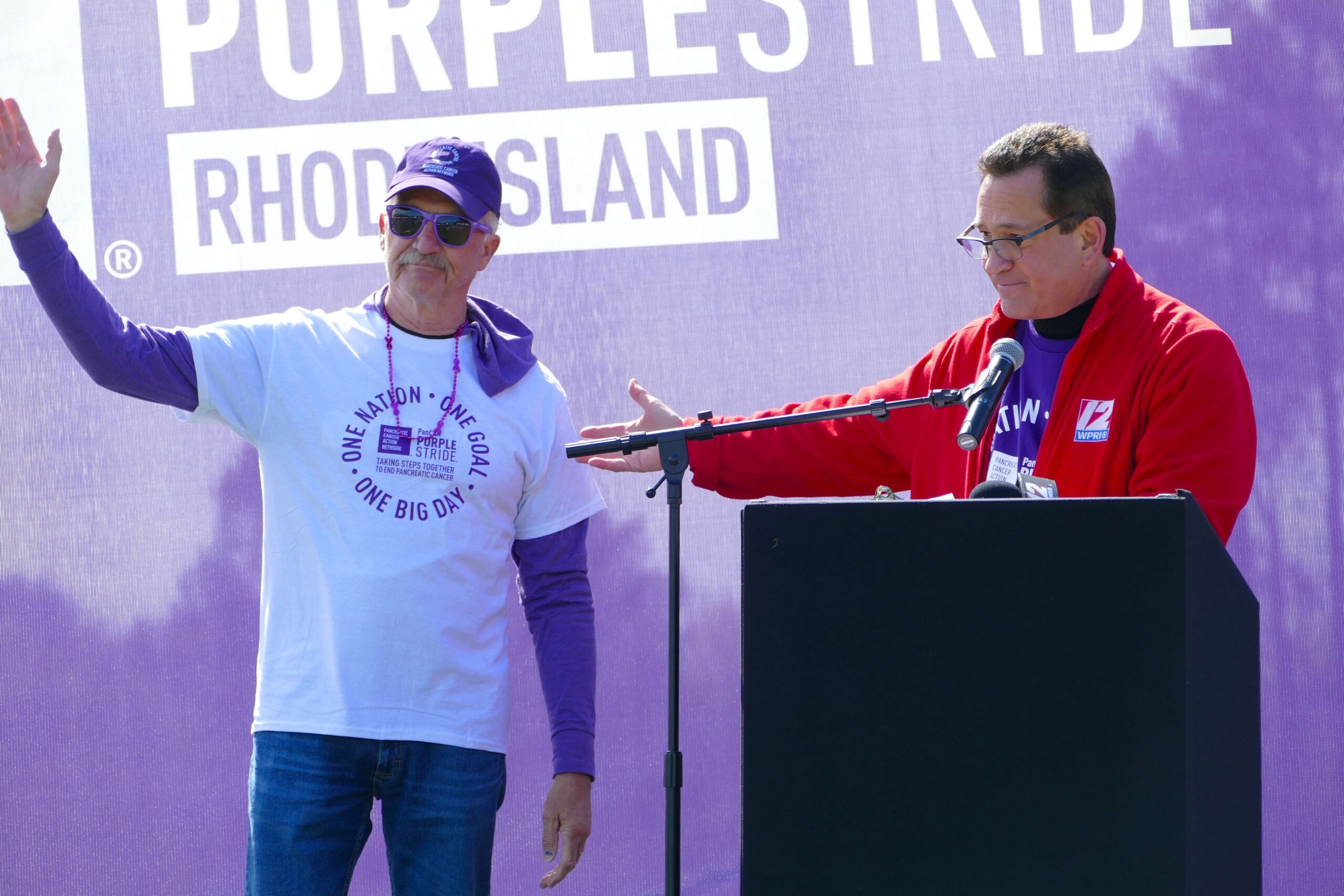
John on stage at PurpleStride Rhode Island.
John: I’ve played music my whole life but never really wrote songs. While I was going through treatment, I thought that I would like to write a song. But how do you write a song about pancreatic cancer?
I thought about commercials I’ve seen on TV with jingles, and that’s how I came up with the idea for “Wage Hope.” I recorded the song at a friend’s recording studio.
I gave the song to the Rhode Island Affiliate, and they play it at PurpleStride every year.
Paula: As an 11-year survivor and member of PanCAN’s Survivor Council, do you often get connected with others who have been diagnosed with pancreatic cancer?
John: I do, and it’s where I get the most gratification. When I was diagnosed, I would have loved to have had someone to talk to who’d been through it.
The pancreatic cancer community here encourages newly diagnosed patients to call me, and many do. I talk to new patients all the time through the affiliate and referrals from friends.
I like to meet with them in person if I can. We have coffee together and just talk. I want them to see that I’m not lying in a hospital bed. I’m not just surviving—I’m living a normal life.
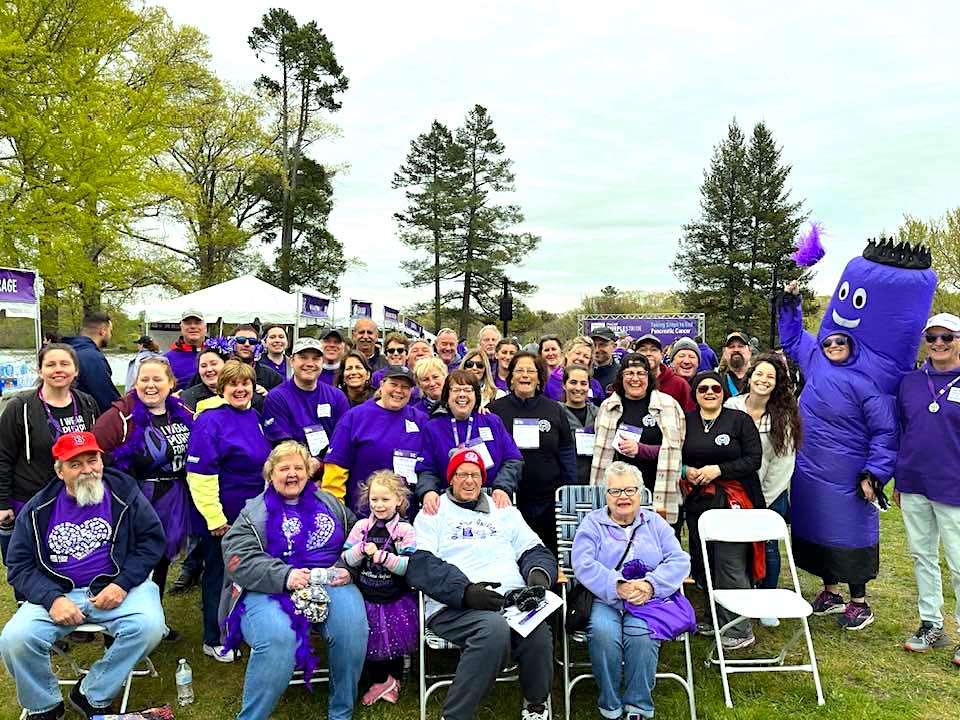
Kevin Sullivan (center) and his family at his final PurpleStride.
John: It’s going to be a fight. I don’t like sugarcoating things. Surgery, chemo, radiation—not fun.
My number one suggestion is to remain positive. Your mind is very powerful. If you go down a path of negativity, it’s not going to help at all.
After positivity, my number two suggestion is to gain knowledge. Get as much information as you can.
I understand that it’s hard to stay positive. But why can’t you be part of the 13%? I’m proof that you can beat it, and I’m not the only one.
Paula: Thank you, John, for everything you do for PanCAN and the pancreatic cancer community!