CONTACT US
 Editor’s note: The “Research Spotlight” series is written by Dr. Anna Berkenblit, PanCAN’s Chief Scientific and Medical Officer. Each month, Dr. Berkenblit shares her insights into the latest news and research in pancreatic cancer. Follow Dr. Berkenblit on X and LinkedIn.
This year’s PanCAN Scientific Summit was an inspiring reminder of what happens when bright minds and shared purpose come together to change the future of pancreatic cancer. Together, we are catalysts for change. Each year, this event serves as a unique opportunity to unite researchers, clinicians, patient advocates, and partners who are all working toward one common goal of accelerating progress for patients.
But this year felt different. There was incredible energy in the room, a shared determination to keep pushing forward despite the challenges that face our field. Amid ongoing uncertainty in federal research funding, the gathering reinforced how vital it is to continue standing shoulder to shoulder with the scientific community, sustaining the momentum that drives innovation and discovery. The conversations and collaborations that unfolded over these few days were filled with passion, purpose, and hope, and reminded me why this work matters so deeply.
Even with the weight of federal funding uncertainty, the attendees made the most of the opportunity to be together to share ideas, highlight progress, and build collaborations. Large groups of attendees – ranging from junior scientists to seasoned clinicians to members of our Board of Directors – gathered for guided tours of poster presentations at our opening reception on Saturday night. Topics included new-onset diabetes as an early symptom of pancreatic cancer, facilitating genetic testing in underrepresented groups, and discovery of biomarkers to predict whether a patient’s tumor is likely to respond or be resistant to therapy.
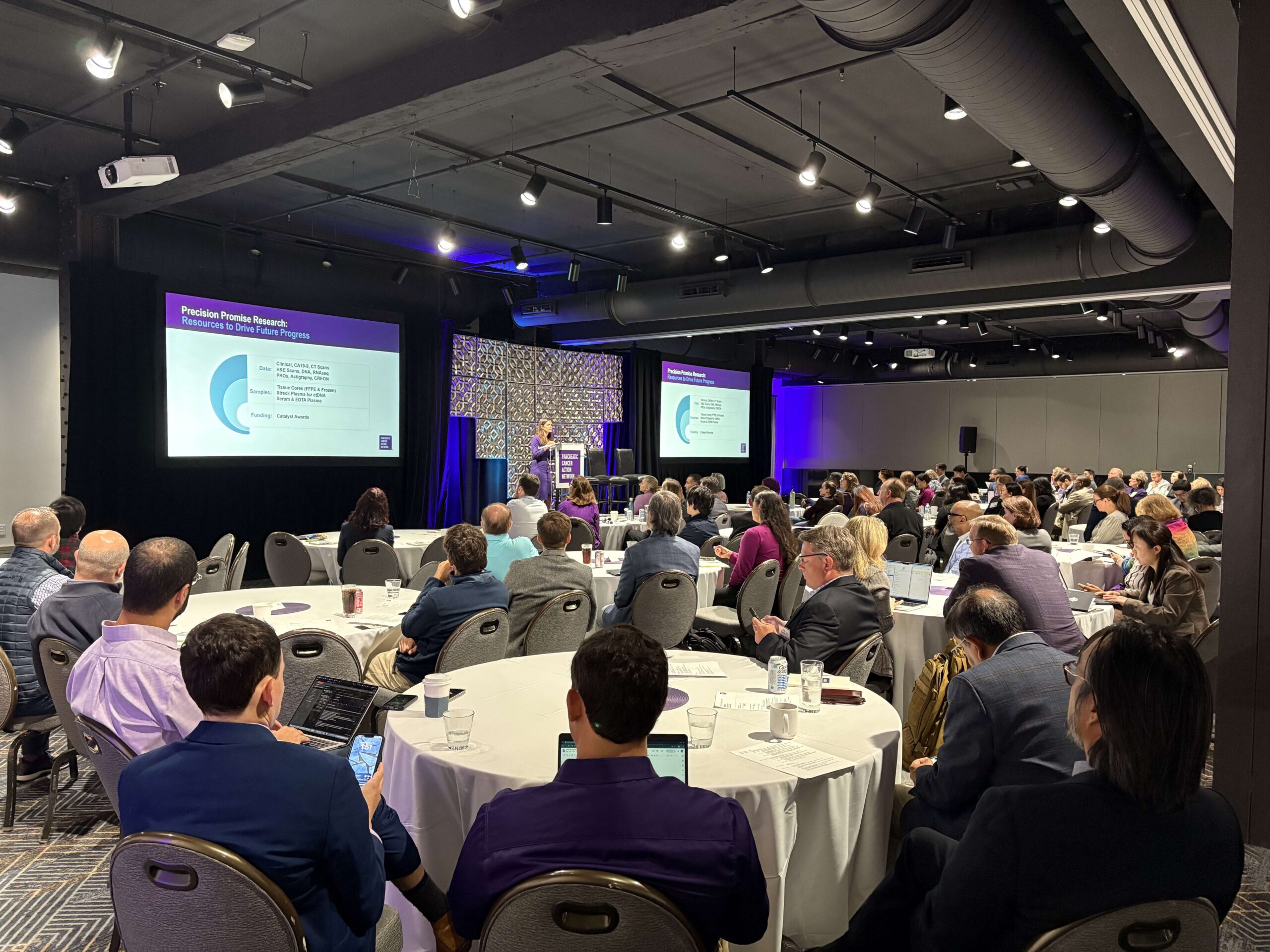 From the latest breakthroughs in immunotherapy and KRAS-targeted treatments to new insights into the “time toxicity” of cancer care, oral presentations at the Summit spotlighted the breadth and depth of work shaping the future of pancreatic cancer science. We got to hear from recipients of PanCAN research grants, including Career Development Awards and Fellowships for junior scientists. We also heard the latest from grantees who received Therapeutic Accelerator Awards – multimillion dollar grants that support the early development of investigational treatments for pancreatic cancer.
Dr. Jonathan Pachter, Chief Scientific Officer at Verastem Oncology, who received the inaugural PanCAN Therapeutic Accelerator Award, shared that they “would not have been able to conduct this clinical trial without PanCAN’s support.” Dr. Thomas Heineman, Chief Medical Officer of Oncolytics, recipient of another Therapeutic Accelerator Award, said that PanCAN “facilitated introductions to world experts in pancreatic cancer.” In addition to the funding, he said, these relationships were critical to the design and execution of their clinical trial.

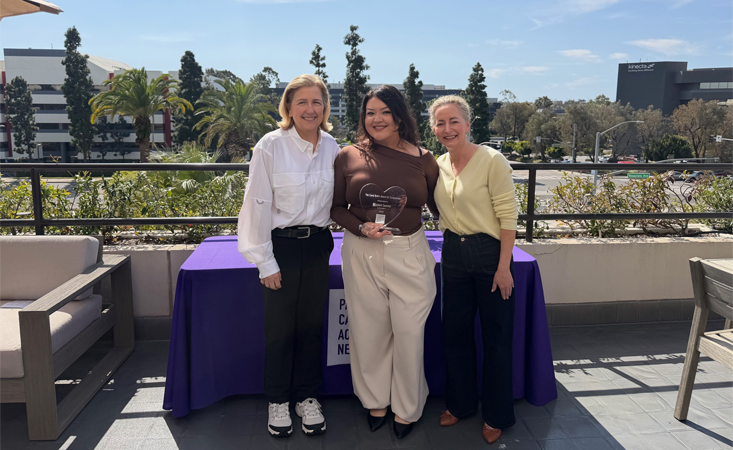
Tammy Buist, PanCAN and Dr. Jonathan Pachter, Verastem Oncology
Equally exciting were the updates to PanCAN’s SPARK platform, which is transforming how researchers access and analyze patient data to generate insights faster and more collaboratively than ever before. I am so excited to see how different academic and company partners are using data from PanCAN’s clinical initiatives to ask questions like, how do different tumor mutations affect patient outcomes and response to treatment? And, can we identify rare subsets of patients with certain tumor alterations to conduct an innovative clinical trial remotely?
The PanCAN Scientific Summit wrapped up with a robust panel discussion about federal funding challenges, and how we can work together to overcome them. Dr. Howard Crawford, member of PanCAN’s Scientific & Medical Advisory Board (SMAB), said, “We’re an extremely collaborative community because of PanCAN.” And in his closing remarks, SMAB chair Dr. Gregory Beatty assured everyone, “It’s important for us to stay together. Where there’s a will, there’s a way!”
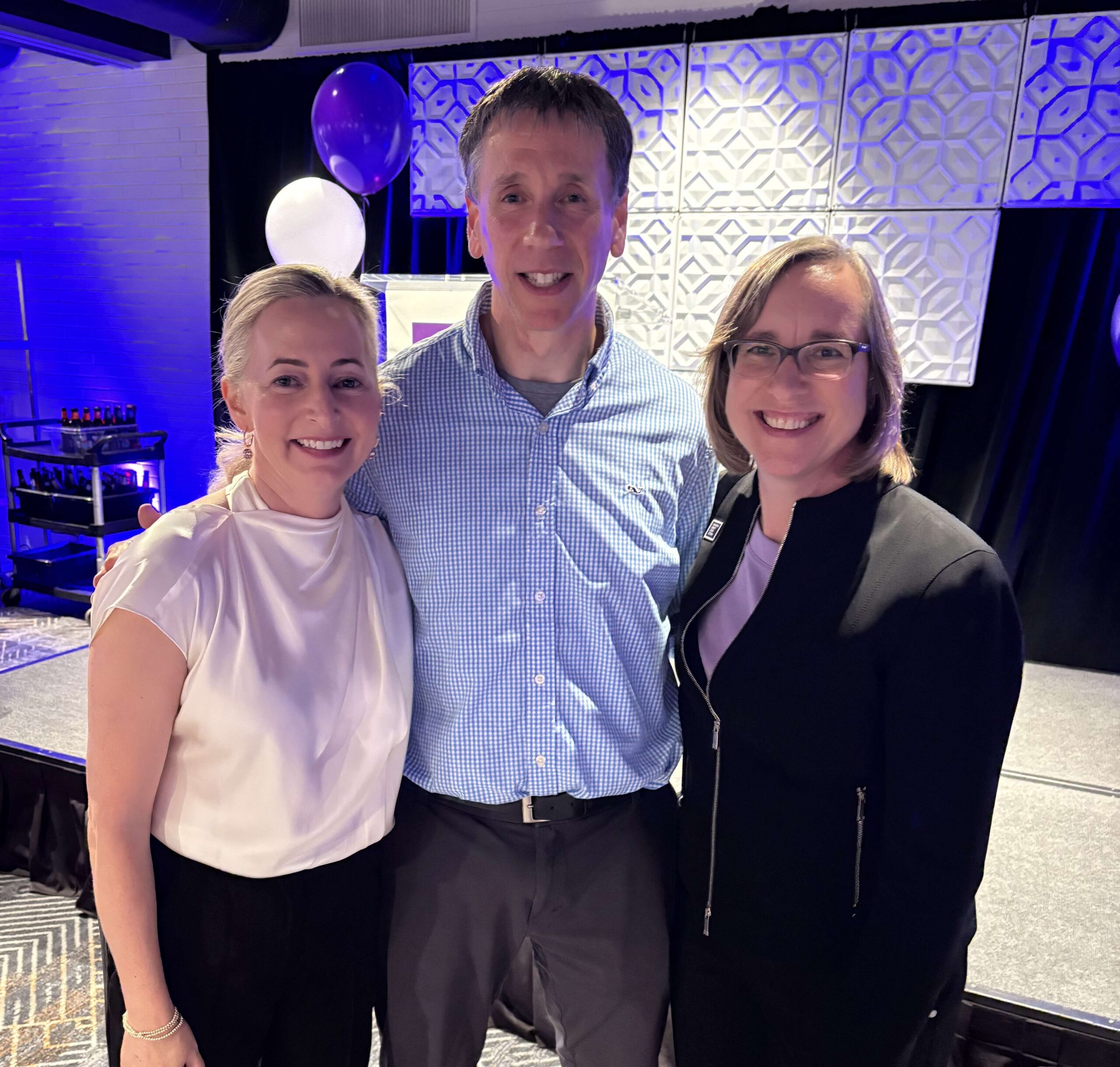
Julie M. Fleshman, Dr. Gregory Beatty, and Dr. Anna Berkenblit
Following Scientific Summit, I had the opportunity to join scientists from around the world for the American Association for Cancer Research (AACR) 2025 Special Conference on Pancreatic Cancer. There I got to hear from leading experts who are working to change the outlook for one of the toughest cancers to treat. The meeting turned the spotlight on several new and promising directions in pancreatic cancer research. Here are the highlights that stood out to me:
- KRAS – the previously “undruggable” target that is mutated in more than 90% of pancreatic tumors, was the focus of numerous presentations and mentioned in nearly every talk. Now that two KRAS-targeting drugs are approved for colorectal and lung cancer and are available for the small subset of patients whose pancreatic cancers carry the G12C mutation, and many more investigational agents are being tested in the lab and clinic, researchers are looking toward overcoming resistance and innovative combination approaches.
- Tumor microenvironment – we’ve known for years that the tumor microenvironment can impact drug delivery to the cancer cells within the tumor, and more knowledge is defining the role of individual cell types to provide nutrients to the tumor, to suppress or attract the immune system, and to mediate pain via nerve interactions. The more we learn about the tumor microenvironment, the more it becomes clear that a successful treatment approach may need to target both cancer and non-cancer cells.
- Early detection – elegant new lab-based tools are allowing us to see pancreatic cancer precursor lesions, called PanINs (pancreatic intraepithelial neoplasia), like never before. Findings from these studies are revealing features that may aid in the development of strategies to detect PanINs before they progress to invasive cancer. Another presentation focused on the potential for artificial intelligence (AI) to evaluate CT images and find abnormalities not detectable by the human eye.
- A special award – I was delighted to witness PanCAN grantee and emeritus member of our SMAB, Dr. Frank McCormick, receive the inaugural Stephenson Global Prize. This richly deserved honor recognized a tremendous career devoted to studying the RAS gene and contributing to numerous breakthroughs. Dr. McCormick was also credited for his leadership with the National Cancer Institute RAS Initiative. In Dr. McCormick’s acceptance lecture, he praised PanCAN and our advocates’ role in fighting for more attention to pancreatic cancer, which resulted in the establishment of the RAS Initiative.
As I reflect on the week, I feel both humbled and deeply energized. The spirit of innovation and hope that filled both Scientific Summit and the AACR special conference is what will continue to drive us forward toward a future where patients with pancreatic cancer live longer, fuller lives.