CONTACT US
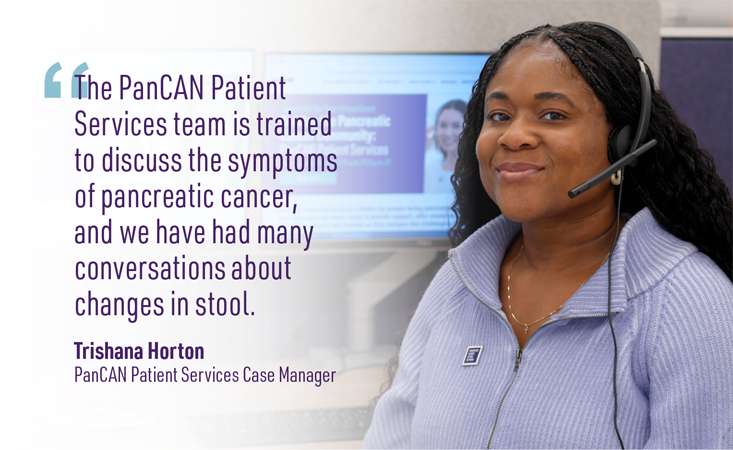
Trishana Horton is a Case Manager on the PanCAN Patient Services team. She talks with people who call and email Patient Services about everything from the diagnosis and treatment of pancreatic cancer to risk factors, symptoms and more. Here, she takes up the taboo topic of bowel movements.
For the human body, bowel movements are as important as breathing. We “poop” after the body has taken all the nutrients it can from the meals we eat and has to get rid of the waste left behind.
Despite this important bodily function, we don’t talk about poop (also known as stool) nearly as much as breathing! Sometimes it can feel awkward to bring up questions about bowel movements in doctor’s appointments. It may feel easier to brush off concerns than to start a conversation. But learning to identify changes in our stool is key, especially when it comes to recognizing a common symptom of pancreatic cancer.
As PanCAN Patient Services Case Managers, our job is to educate patients and caregivers about the disease. It is important to know that pancreatic cancer can cause vague symptoms, like pain, digestive problems and changes in stool.
We want to raise awareness so everyone can feel empowered to have conversations with their doctor about symptoms they may be experiencing. So, what’s normal and what should you watch out for when it comes to poop? Let’s explore.
What does normal stool look and feel like?
The Bristol Stool Chart describes the look, feel, and consistency of stool labeling each type from healthy to unhealthy (diarrhea, constipation, etc.). It is named after the researchers who developed the chart at the University of Bristol in the United Kingdom. Normal stools can be various shades of brown, sausage-like in shape and easy to pass. Typically, a person may pass stools one to three times a day though this can depend on a person’s diet and lifestyle.
If talking about the shape and feel of poop is difficult for you, it might be helpful to reference the Bristol Stool Chart at your appointments.
Types of abnormal stool
Some types of stool to look out for include those that look separate like pebbles, usually indicating constipation. Poop that is watery and entirely liquid, with no solid pieces, indicates diarrhea. Changes in your diet can also lead to changes in your stool, but these changes shouldn’t stick around long term. So what happens when you persistently experience concerning stools?
Oily poop
Oily or “greasy” poop may indicate that there are excessive amounts of fat in your stool. This poop may also appear to float and look pale – resembling the look of clay – and be hard to flush. If you’ve had a fatty meal or tend to eat a lot of fats (like nuts), this could be the culprit.
Foul-smelling poop
Doesn’t poop always smell bad? The odor of stool is caused by the breakdown of food by your digestive system. The foods you eat, and the frequency of your bowel movements, determine the smell of your stool from day to day. Foul-smelling poop is typically accompanied by a “dark” color that can even appear black. This smell is not your normal, funky poop. It smells rotten, metallic, and distinctively different from your normal poop smell. If you also see blood, it is an immediate sign that you should speak with your doctor as soon as possible.
When should I talk to my doctor?
If you notice abnormal changes in your poop – like foul-smelling, oily, watery or hard stools – that persist over days or weeks, you should speak with your doctor. They can help you learn more about your bowel health and if any more tests are needed.
Our Patient Services team has spoken to many patients and loved ones who shared that they wish their healthcare team noticed signs of the disease earlier. Some patients advocated for themselves and their concerns were dismissed. Others received testing and no evidence of pancreatic cancer was found. And there are those who didn’t think their symptoms were serious enough to explore management strategies with their doctor.
Bottom line: You know your body best. PanCAN Patient Services is here to help you advocate for yourself, understand the symptoms you’re experiencing and provide resources to help you find the healthcare you need.
Talking with your doctor
Talking with your doctor about your poop may feel embarrassing. But these conversations are necessary to learn if your symptoms are concerning, or just an expected part of a lifestyle change, like a new treatment or a dietary change.
And remember: For people already diagnosed with pancreatic cancer, any conversation with your doctor about digestive issues like diarrhea or constipation should also include questions about pancreatic enzyme replacement therapy, or PERT. These prescription enzymes help the body digest fats and proteins, which is usually difficult for people with pancreatic cancer, because the pancreas cannot make enough enzymes to digest food as well anymore.
Our team can support you by providing fact sheets you can take to your appointments. Being prepared with specific notes and questions about your stool – before you meet with your doctor – can help, too.
Keep a journal
Journal the changes in your poop and be as specific as you can. Here is a list of questions to help structure your notes.
- How often do you experience changes in your stool?
- Can you describe those changes? (Use the Bristol Stool Chart for help describing the look and feel of your poop.)
- After what meals do you experience these changes?
- Have you tried modifying your diet?
- What changes did you implement?
- Did they help?
Keeping a detailed record of these changes will help you feel more confident when speaking with your doctor. It will help ground the conversation and give you something to focus on – other than your nerves.
Compose a list of questions
Have some questions ready for your doctor, even if it’s just two or three. These questions can include things like learning about your risk of developing pancreatic cancer, as well as learning more about tips and management strategies you can implement now.
- Am I at risk of developing a more serious condition, like pancreatic cancer?
- Are there strategies I can implement now to manage these symptoms?
- What further tests can be used now to learn why these symptoms persist?
Don’t be afraid to ask your doctor hard questions. Be mindful of the time you have with your doctor and make sure that time counts.
PanCAN Patient Services is here to help
The PanCAN Patient Services team is trained to discuss the symptoms of pancreatic cancer, and we have had many conversations about changes in stool. We are also happy to help prepare any additional questions you may want to bring to your doctor’s appointment. Contact PanCAN Patient Services to start the conversation.