CONTACT US
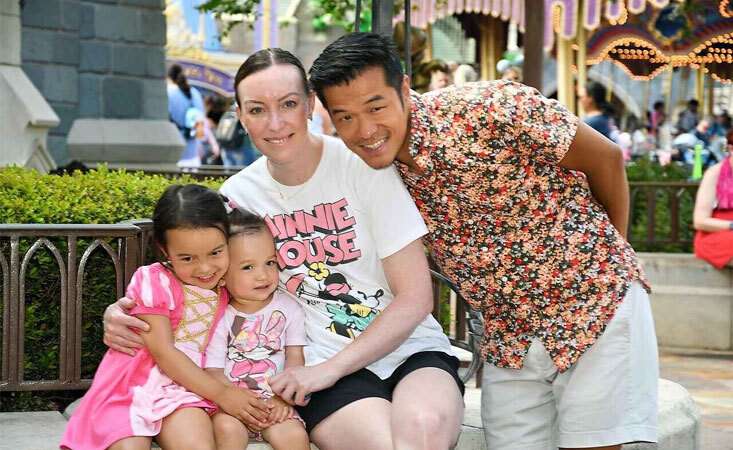
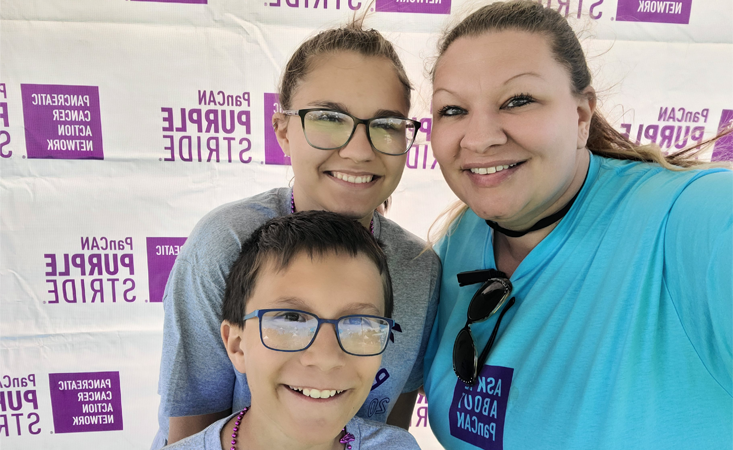
Jaclyn Hayes, her husband, James Lin, and their children.
While pregnant with her second child, Jaclyn Hayes experienced debilitating back pain initially attributed to a possible pinched nerve. Then came the repeated bouts of flu-like symptoms and fever chalked up to a urinary tract infection (UTI). Also gnawing at her: She didn’t seem to be gaining weight like she did with her first baby.
After several inpatient hospital visits for the recurring fever, body aches and chills, Jaclyn remembers saying to her obstetrician at a regular check-up, “Something’s not right here. I don’t think this is a UTI.”
Next came another inpatient stay, which led to an abdominal ultrasound and MRI. These tests showed multiple masses on her liver and another on her pancreas. About 31 weeks pregnant at the time, she was initially told she’d be able to have a biopsy and continue to carry the baby to full term, but that proved not to be the case. After switching to a different medical center, the new plan was to induce the birth. But when she went in for that procedure, the baby was ready to be born. Her daughter came into the world early at 34 and a half weeks.
“While she was in the NICU, four days postpartum, that’s when I had my biopsy,” said Jaclyn.
Jaclyn was just 35 years old – with a newborn baby and a two-and-a-half-year-old – at the time of her stage IV pancreatic cancer diagnosis.
Now a two-year survivor, she’s sharing her story to raise awareness of the signs and symptoms of the disease, even for younger people. Recent research suggests that many gastrointestinal cancers, including pancreatic cancer, are being diagnosed more often in people under 50 years old.
“Pancreatic cancer isn’t one of those cancers that young people are accustomed to hearing about,” she said. “Everybody knows about breast cancer and colorectal cancer. Pancreatic cancer doesn’t get a lot of the spotlight. I want to make people aware that pancreatic cancer does impact my age bracket.”
She’s also advocating for more research funding. As someone currently on the one FDA-approved targeted therapy recently made available to people with a rare alteration in their tumor called NRG1 fusion-positive, she points to her story as proof that research does change lives. When chemotherapy was no longer effective, this new drug gave her something else to turn to.
She wants more options for rare mutations like hers and for all patients facing pancreatic cancer.
“Because of sustained research and innovation, there’s a handful of targeted therapies for some other mutations like HER2 and ALK,” she said. “The same could be done for NRG1. It just needs a push to get there.”
Biomarker Testing Leads to New Treatment
Comprehensive genetic and biomarker testing at Jaclyn’s treating institution opened the door to this new treatment option. She had testing early in the course of her treatment, which turned out to be more than 40 rounds of chemotherapy over a year and a half.
During this time, her healthcare team flagged a promising drug in a clinical trial, called BIZENGRI® (zenocutuzumab-zbco), targeting the alteration present in her cancer.
“We knew for over a year that it was an option,” said Jaclyn. “We didn’t make the transition to it until I progressed from chemo and at that point it was FDA approved.”
She started the new treatment in the spring of 2025 and has seen a vast improvement in quality of life. Since targeted therapies generally do not harm healthy cells, they usually cause fewer side effects than other treatments.
“It was a complete 180 from chemo with the nausea and fatigue,” Jaclyn said. “It’s a one-day treatment and I bounce back quickly. I take my kids to gymnastics class the next day, something I couldn’t do before.”

Now, with a less intense treatment schedule, she’s making the most of every moment with her children. Her family, many of whom stepped in during the chaotic time after her diagnosis, remain a focus.
“My parents were pretty crucial in the early stages helping with my toddler,” she said. “My in-laws live in Taiwan, and once they heard the news, they flew halfway around the world to come stay with us. They were here for a period of time too. It was just all hands on deck.”
She calls her approach to life “scheduling in the joy,” which has led to recent trips with her siblings, parents, husband and kids to places like Disney World, Long Beach Island, New Jersey and Clearwater Beach, Florida. Together, they celebrate the victories and enjoy their time together.
An Advocate for Research
Jaclyn is also a leading advocate for increasing pancreatic cancer awareness and research funding. PanCAN’s New Jersey Affiliate tapped her to do a television interview with local channel NY PIX11 in the lead up to PanCAN PurpleStride 2025.
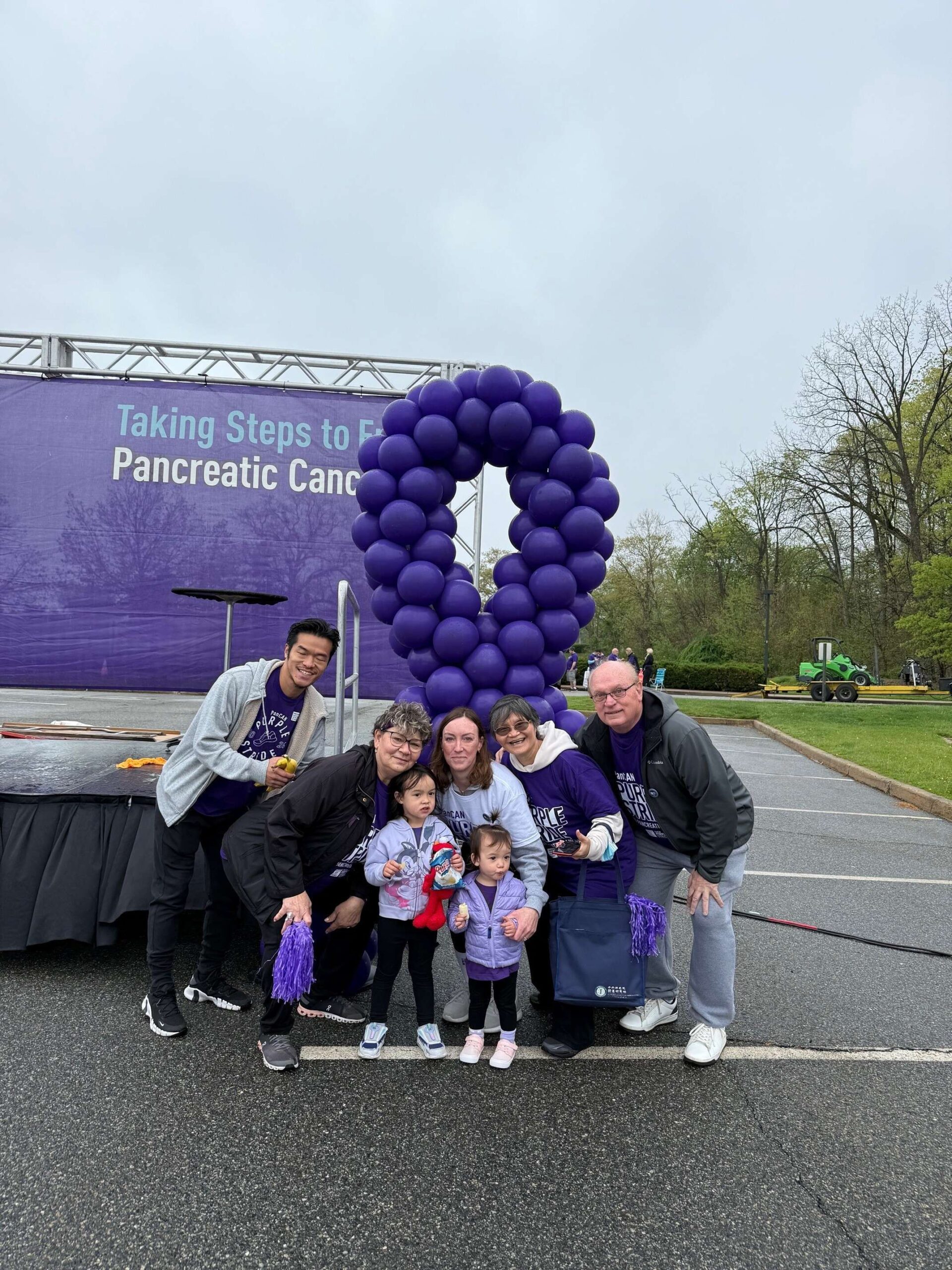
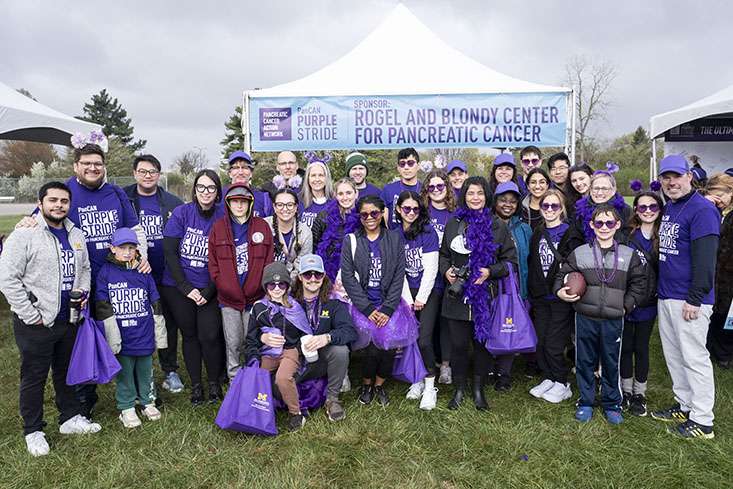
Jaclyn and supporters at PanCAN PurpleStride 2025.
“Once they thought of me, I couldn’t say no,” she said. “It was my first time ever being on TV.”
She’s been inspired by the story of Adam Deal, a fellow PanCAN volunteer who also had an NRG1 fusion-positive alteration and who participated in an earlier clinical trial testing a different targeted therapy. Although he died in 2020 at the age of 36, he served as a tireless advocate for research.
“He did a lot of the initial push for NRG1 awareness,” Jaclyn said. “It would be nice to pick up where he left off and try to propel research forward for our shared mutations.”
Through the New Jersey Affiliate, Jaclyn has spoken to representatives from her Congressional offices about the importance of sustained federal investment in research.
“I joined a couple of calls to share my story, hopefully to pull some heartstrings and get people to sign legislation,” she said.
There’s exciting research right now for therapies targeting KRAS, the most commonly mutated gene in pancreatic cancer. Jaclyn wants to harness that momentum for rarer alterations like hers. She emphasizes that every patient who participates in a clinical trial, every person who advocates for research funding, every person who raises awareness of symptoms and risk factors, adds up to something larger. Each moment of progress creates a path to future discoveries.
“Even if you don’t see the reward in your lifetime, to be an advocate is an opportunity to make a real difference,” she said.

Any treatments, including clinical trials, mentioned in this story may not be appropriate or available for all patients. Doctors take many things into account when prescribing treatments including the stage and type of cancer and the overall health of the patient.