CONTACT US
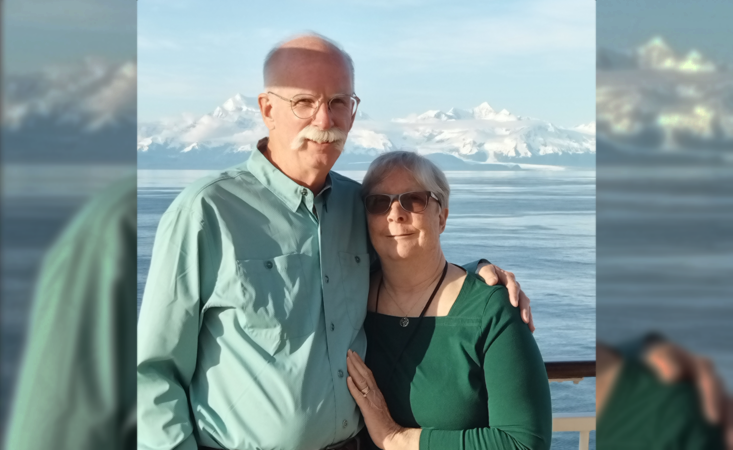
Editor’s Note: Survivor and Hampton Roads PurpleStride Chair John O’Grady spoke with Community Engagement Senior Specialist Paula Mukherjee about his volunteer experiences and advice for others impacted by pancreatic cancer.
Paula: What initially brought you to PanCAN?
John: I’m a 15-year pancreatic cancer survivor. I was diagnosed in 2010 when the five-year survival rate was only 6%.
That year, I had the Whipple procedure. In 2012, I went back for my two-year checkup.
I told the radiation oncologist, Dr. Joseph Herman, that there must be a reason that I survived this. I asked him for an organization where I could help other folks get through pancreatic cancer.
He was on PanCAN’s Scientific and Medical Advisory Board and told me to look up PanCAN when I got home. When I did so, I found the affiliate here in Hampton Roads and started volunteering.
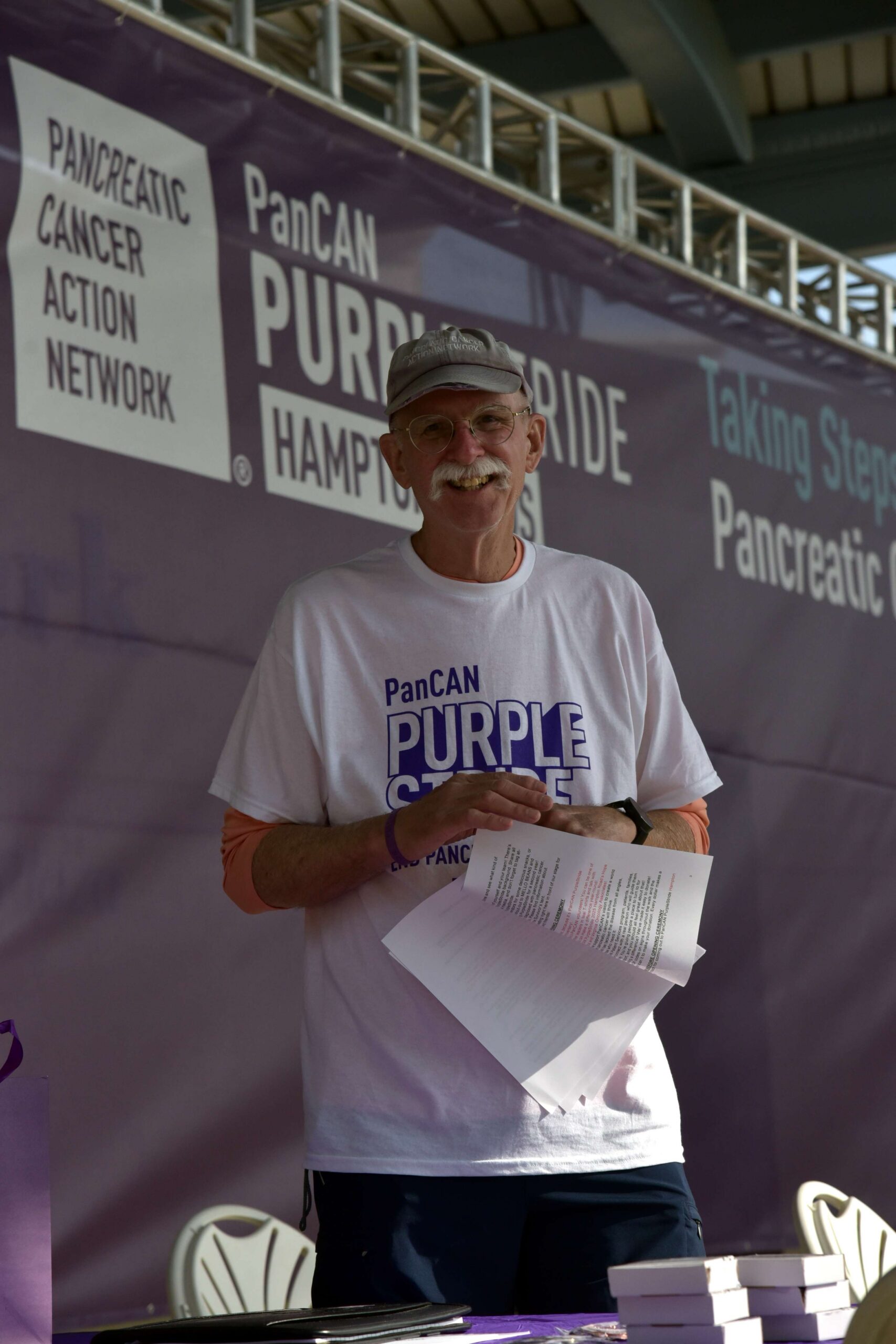
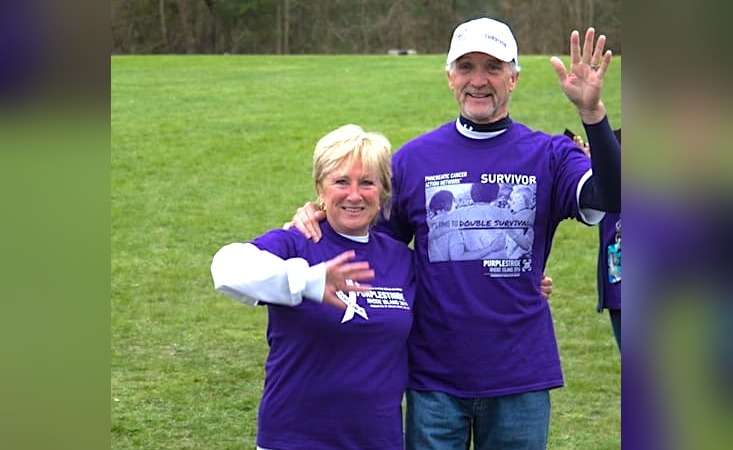
John at PurpleStride 2025.
Paula: Were you familiar with the disease when you were diagnosed?
John: No; I was misdiagnosed for two years.
I had pain and went to see my doctor. I was on the road all the time for work and not eating well. My doctor said to eat healthier and get more exercise.
My scans and blood work came back as normal, but the pain never went away.
We were coming home from a family vacation and the pain was excruciating. I was jaundiced.
My wife took me to a nearby doctor, and they sent me right away to the local hospital and I had a stent put in. I got pancreatitis and was in the hospital for nine days.
I had a peripherally inserted central catheter (PICC) line put in and was fed total parenteral nutrition (TPN) to keep me going. I could only eat ice chips and water orally for 38 days. I lost about 50 pounds.
No one at that local hospital could treat me. The only place I could go to for treatment was The Johns Hopkins Hospital, five hours away. When we got there, they knew it was pancreatic cancer right away.
I then had the Whipple, followed by chemo, radiation, and more chemo.
The post-operation treatments took about 11 months to get through. I was still working full-time and traveling. I would get very tired, so my wife, Diane, spent months traveling with me. She’d drive me to a meeting and then I’d sleep in the car while she drove to the next one.
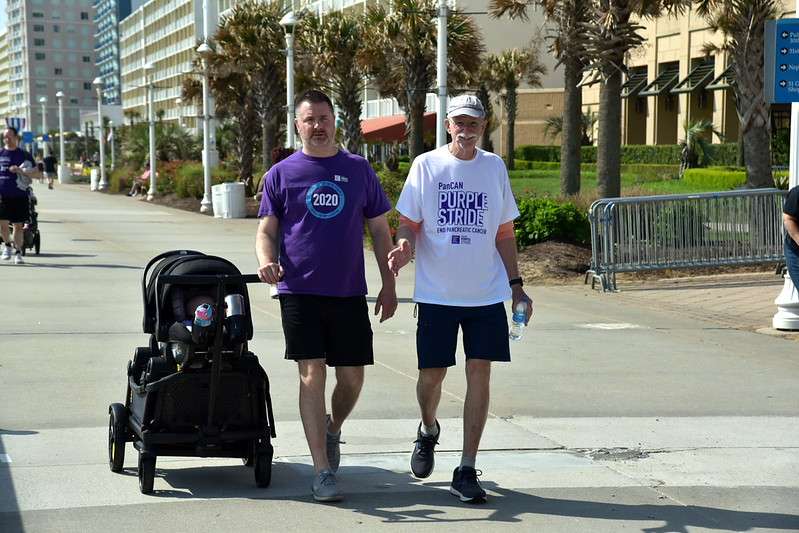
John walking with his son and grandchildren at PurpleStride 2025.
Paula: What changes have you seen in pancreatic cancer treatments and outcomes in the past 15 years?
John: When I was diagnosed, there were only a few hospitals in the United States with dedicated pancreatic cancer programs and pancreatic cancer specialists. You want to have a surgeon at a hospital that does a high volume of these surgeries.
At PurpleStride, Dr. Marybeth Hughes, a surgical oncologist at Sentara, spoke to the crowd and was joined by several of her patients. It was great to hear from her and see how positive she is.
In Hampton Roads, we now have healthcare systems with high-volume pancreatic surgeons, such as Riverside Health, one of our new sponsors. We are really excited to have these resources here in the community.
Also in my area is PanCAN Research Grant recipient Dr. Amy Tang, who has been on the leading edge of early detection research. We now have a lot of research going on here – it’s really exciting.
At the time of my diagnosis, I didn’t have the options for genetic testing and biomarker testing of tumor tissue that exist today.
Over the 15-year period, the five-year survival rate’s gone from 6% all the way up to 13%; it’s more than doubled.
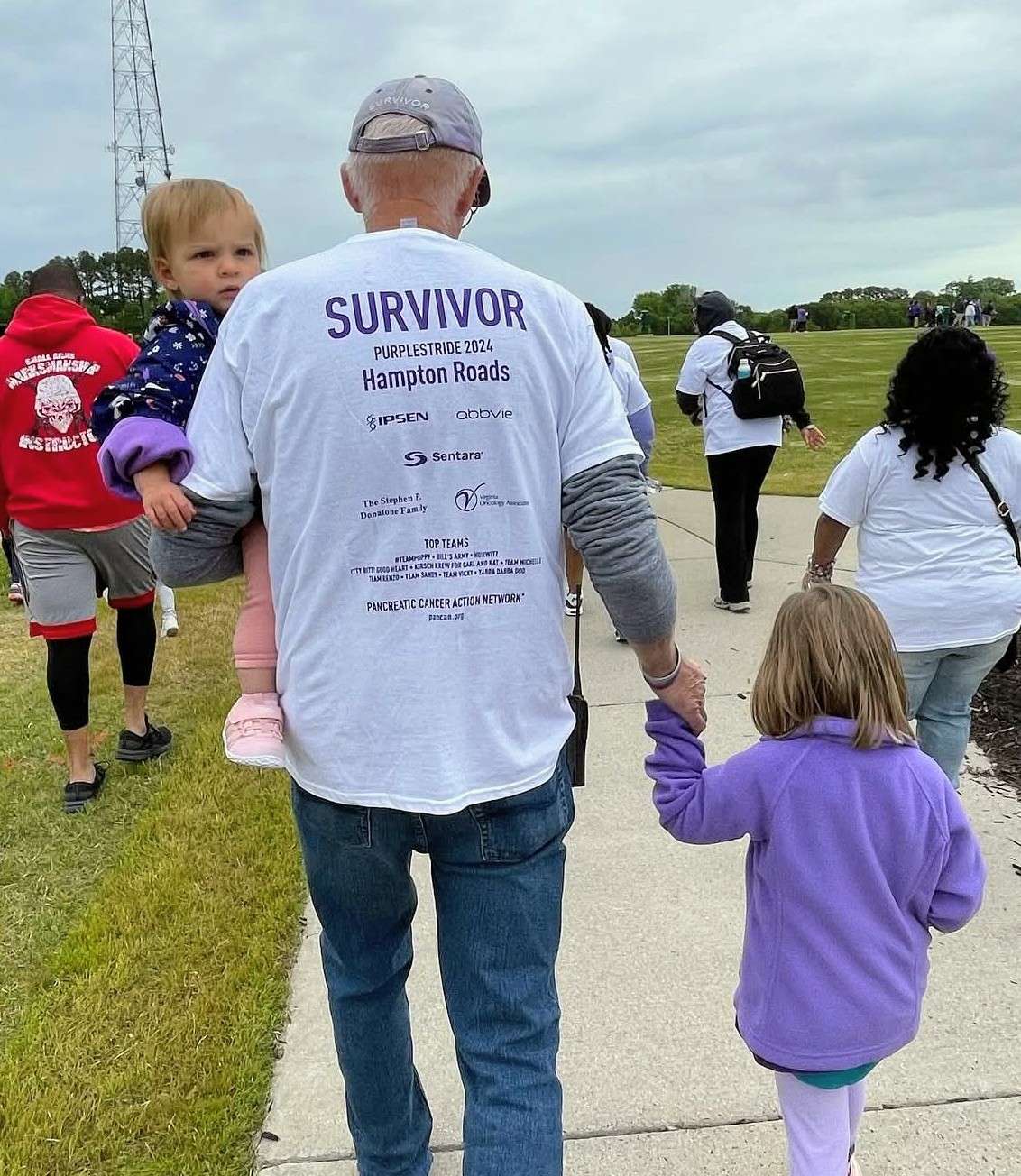
John and family at PurpleStride 2024.
Paula: What inspired you to start volunteering with PanCAN and fundraising?
John: I didn’t want anybody to go through what I went through.
When I was diagnosed, I was bumping around in a dark room. My family had no idea what to do. It was just through the grace of God that I got directed to Johns Hopkins and was able to survive this thing.
I was only 55. My kids weren’t married and I didn’t have any grandchildren.
Today, I’ve got five additional reasons to volunteer: my grandchildren Ellie, Maeve, Reagan, Caden, and Riley.
I just want this disease to be gone.
Paula: Congratulations on a successful PanCAN PurpleStride Hampton Roads! In addition to your role as PurpleStride Chair, you’re also a Team Captain for Team Kick P.C. How was event day?
John: Hectic! It’s a lot of work, but it’s rewarding.
I’ve been a participant for 12 years and chair for four years. This year I had two other volunteers who really helped to push fundraising and awareness.
My team members are my extended family from New York, Pennsylvania and Florida. Everybody contributes. I am very grateful for all they do to help me fight this disease.
The one thing that bugs and motivates me is looking out into the crowd and seeing hundreds of purple participant T-shirts and far fewer white survivor T-shirts. There’s something wrong with that picture, and we can change it if more people get involved.
Paula: What have you found most rewarding about being a PanCAN volunteer leader and PurpleStride fundraiser?
John: Seeing the money raised go to research and PanCAN Patient Services.
I’ve seen the expansion of PanCAN’s services and the number of people we help get through the disease and connect with clinical trials and specialists. I’ve provided support to other survivors through the Survivor and Caregiver Network run by PanCAN Patient Services for 12 years.
Paula: What message would you like to share with others who have been impacted by pancreatic cancer?
John: You have to be an advocate for your own health. Don’t sit back and wait because this disease doesn’t wait.
Reach out and get resources. Find connections in your area. I host a monthly virtual gathering of survivors from all over the country for peer support. If you’d like to join us, please contact me for more information.
Paula: Thank you, John, for everything you do for the pancreatic cancer community.