CONTACT US

 Editor’s note: The “Research Spotlight” series is written by Dr. Anna Berkenblit, PanCAN’s Chief Scientific and Medical Officer. Each month, Dr. Berkenblit shares her insights into the latest news and research in pancreatic cancer. Follow Dr. Berkenblit on X and LinkedIn.
A New Era of Progress Against Pancreatic Cancer
I can’t think of a more exciting and hopeful time for pancreatic cancer than now. We are finally beginning to reap the benefits of decades of research into this challenging cancer. Because KRAS mutations drive the vast majority of pancreatic cancers, researchers have long believed that successfully targeting KRAS (previously considered “undruggable”) could fundamentally change treatment for this disease. PanCAN supported KRAS science well before it became one of the most exciting frontiers in oncology.
The recent momentum around KRAS-targeting therapies is so exciting because the benefit to patients is profound. Daraxonrasib, a pill that targets RAS, doubles survival in patients with previously treated pancreatic cancer – this magnitude of benefit over available therapies has never been seen before in pancreatic cancer. It is the first of a growing wave of therapies that disrupt RAS signaling via different mechanisms in pancreatic cancer. Researchers are also studying combination approaches with other targeted therapies, chemotherapy, or immunotherapy as strategies to overcome or prevent resistance to KRAS inhibition.
None of this progress happened overnight. It reflects years of foundational research, clinical collaboration, and sustained investment in pancreatic cancer science. At PanCAN, we have always believed that transforming outcomes in pancreatic cancer requires investing in bold science long before breakthroughs reach headlines.
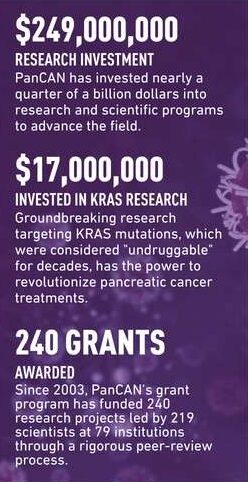 That long-term commitment includes a substantial investment in KRAS-focused science specifically. PanCAN has provided approximately $17 million in funding dedicated to KRAS-related research across roughly 39 investigators and 45 grants over the past 25 years. PanCAN-funded researchers have helped deepen scientific understanding of pancreatic cancer biology, identify therapeutic vulnerabilities and advance innovative approaches designed to improve outcomes for patients. While no single grant leads directly to a breakthrough on its own, sustained investment in pancreatic cancer research helps create the scientific ecosystem that makes progress possible.
At the same time that recent headlines about KRAS-targeting therapies like daraxonrasib have captured the attention of the pancreatic cancer community and broader society through media coverage, we’re also hearing exciting potential progress related to personalized mRNA vaccines. While these approaches are dramatically different, together they showcase something important: pancreatic cancer research is finally advancing on multiple fronts at once. Daraxonrasib and personalized mRNA vaccines are different approaches, but together they show how broad and dynamic pancreatic cancer research has become. One approach aims to help many patients with advanced disease using a pill. The other seeks to create individualized treatments tailored to a single patient’s tumor and immune system at the early stage of their disease.
In many ways, these breakthroughs represent the bookends of where the field is headed. Different patients. Different technologies. Different stages of development. But both represent meaningful progress against one of the world’s deadliest cancers.
 Today’s advances are the result of years of work by researchers, patients who participated in clinical trials, advocates who pushed for greater urgency, and organizations committed to accelerating progress. It can be tempting to look for a single cure or one defining breakthrough. But progress in pancreatic cancer is more likely to come from many advances happening at once such as better targeted therapies, more personalized treatment strategies, earlier detection, and greater access to clinical trials and precision medicine. In real time, together, we are turning science into survival.
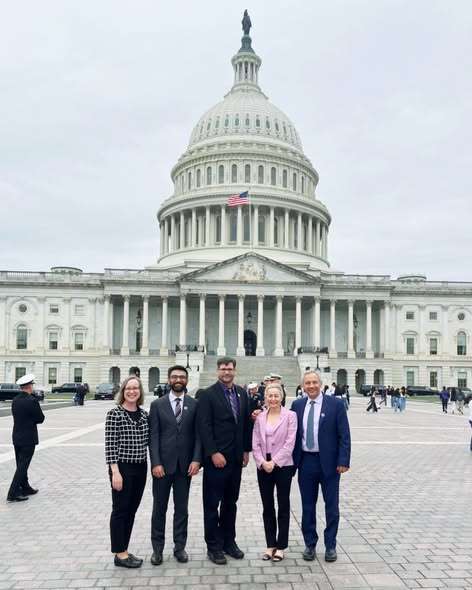
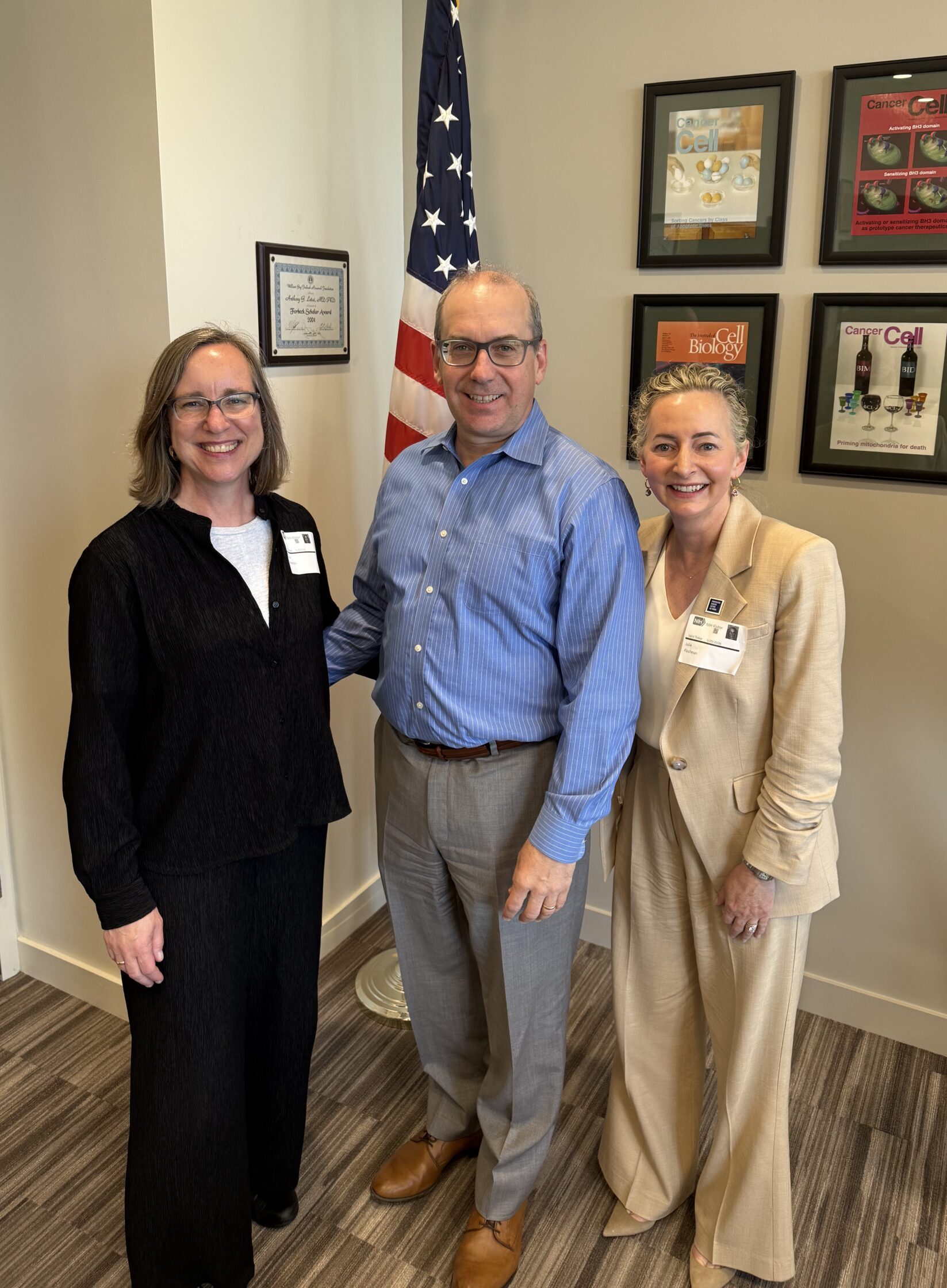 And for us to continue to make progress, we need to continue investing in research and partnering with key stakeholders that can help accelerate progress. Toward that end, in May, PanCAN CEO Julie Fleshman and I met with the new director of the National Cancer Institute (NCI), Dr. Anthony Letai, to discuss the NCI’s role in advancing pancreatic cancer research. We also went to Capitol Hill with pancreatic cancer researchers Drs. Mustafa Raoof from City of Hope, Michael Pishvaian from Johns Hopkins, and Michael VanSaun from University of Kansas, to remind Congress how critical federal funding for pancreatic cancer is for advancing new therapies and early detection strategies for patients.
Without continued investment in research, progress will stall, and we will miss out on the next advance.
While the progress toward better therapeutic options that we’re seeing is not yet a cure, it is the most meaningful shift in treatment development ever. Both the RAS inhibitor daraxonrasib and the mRNA vaccine are still being studied and not yet standard treatments. But, for patients and families facing this disease today, that progress cannot come fast enough. And, for the first time the field is beginning to show what sustained scientific momentum can look like.